
Regional Leagues · September 2026
Regional Sports Leagues: Structure and Standings
The United Kingdom has a vast network of regional sports leagues that give amateur athletes a platform to compete at multiple levels. These leagues are the heartbeat of the sporting community, offering structured competition outside the professional sphere.
This page provides a detailed overview of the amateur basketball and multi-sport leagues operating across the British regions. We focus on the organisational frameworks, the areas served, and the current state of play within these community-led organisations.
From county-level divisions in the Midlands to national leagues in Scotland and Wales, we track how local clubs are structured, how promotion and relegation work between divisions, and how regional champions are determined each season.
Framework · 01
Understanding the British Regional Basketball Framework
Amateur basketball in the UK is organised into a hierarchy that allows for clear progression and local competition. Each region, from the South West to Scotland, has its own governing bodies that oversee league operations. These frameworks ensure that games are played under consistent rules and that clubs are held to high standards of sportsmanship.
We break down the different tiers of competition, explaining how local teams move between divisions and how regional champions are determined each season. Most regional leagues follow a promotion and relegation model: top-finishing teams advance to a higher division the following year, while lower-finishing teams drop down. This structure keeps competition meaningful across the full season and gives clubs a clear target to work towards.
Local basketball associations typically register clubs at the start of each season, confirm player eligibility, and publish fixtures through county or regional websites. The hierarchy varies slightly between England, Scotland, and Wales, but the broad pattern is consistent: local divisions feed into regional conferences, which in turn connect to national-level amateur pathways.
League Tiers Explained
-
Local Division
Entry-level community leagues run by town or borough associations. Open to new clubs and school-linked teams.
-
Regional Conference
County-wide or multi-borough divisions. Clubs qualify through strong local division finishes.
-
Premier Amateur
Top regional tier feeding into national amateur pathways. Highest level before semi-professional competition.
-
National Pathway
Regional champions progress to inter-regional knockouts and national amateur cup competitions.

Grassroots Review · 02
Grassroots Sports Review: League Performance
A periodic review of league performance is essential for maintaining a high standard of amateur competition. We look at the parity between teams in various regional divisions and the overall quality of play observed during the season. This review helps identify leagues that are flourishing and those that may require more community support.
By analysing match results and league dynamics, we provide a clear picture of the competitive landscape in British amateur sports. Our review draws on fixture data, match reports submitted by local correspondents, and conversations with club volunteers who run the leagues week to week.
Leagues with closely matched teams tend to produce more engaging seasons, with final standings often undecided until the last fixture. Where one or two clubs dominate for several years running, that can signal a need for restructuring — perhaps introducing a second tier or adjusting promotion criteria to keep competition balanced.
Region · 03
The Midlands: A Hub for Community Competition
Birmingham
Birmingham hosts some of the most intensely competitive amateur basketball in the region. Multiple divisions operate across the city, with established clubs sharing community sports halls with newer teams formed through university and college links. Local rivalries draw regular spectator crowds for weekend fixtures.
Leicester
Leicester's community-focused leagues emphasise youth development and participation. Several clubs run junior sections alongside their adult teams, creating a natural pathway from school basketball training into competitive regional play. The city's diverse sporting culture supports a steady flow of new players each season.
Nottingham
Nottingham combines established league structures with a strong volunteer base. Clubs here benefit from long-standing relationships with local leisure centres and school facilities. The region has produced several teams that have progressed successfully into premier amateur tiers in recent seasons.
The broader Midlands region also includes active leagues in Coventry, Wolverhampton, and Stoke-on-Trent. These areas face shared challenges: facility availability, volunteer recruitment, and travel distances for away fixtures. Despite these pressures, the region remains a powerhouse of grassroots activity with consistent participation numbers season after season.
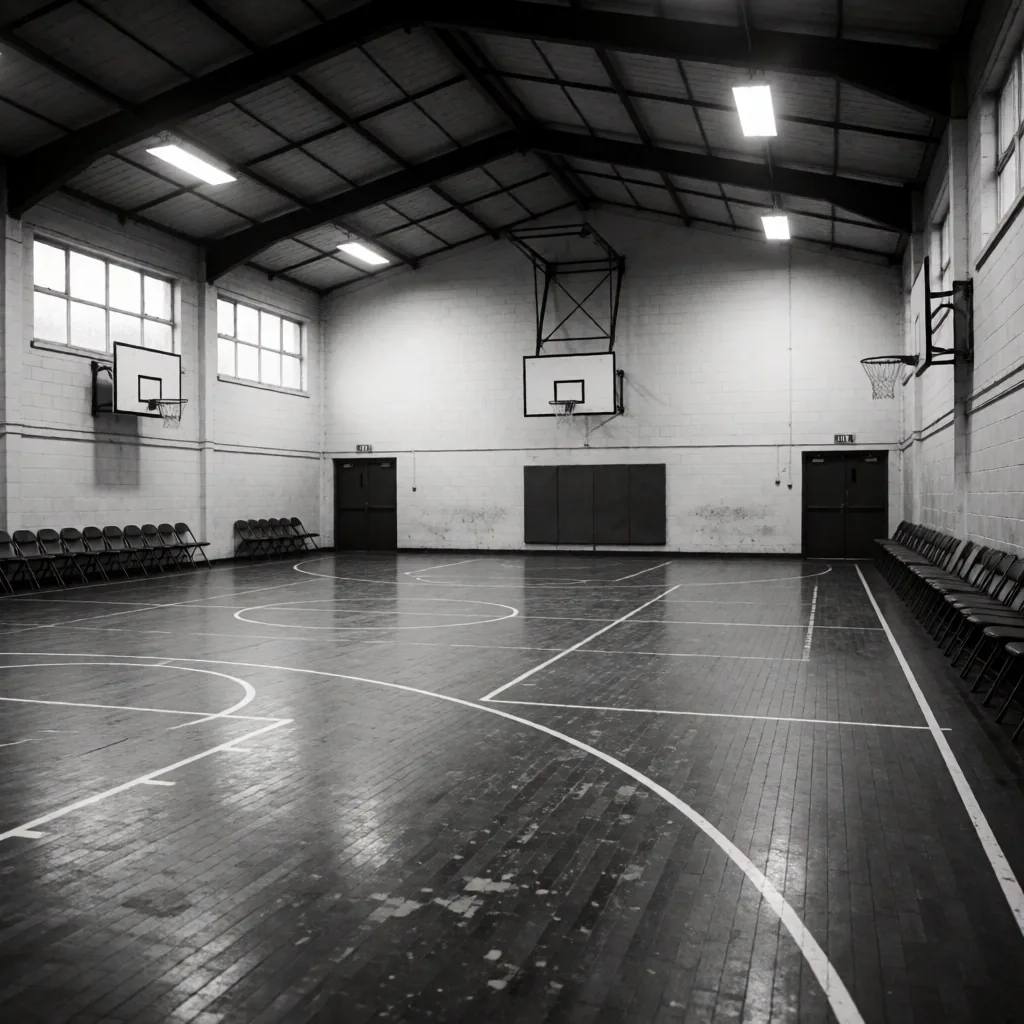
Community Sports Hall
Typical venue for northern regional league fixtures
Region · 04
Northern England's Amateur Sports Scene
In the North of England, regional sports leagues are deeply embedded in local culture. Whether it is the competitive basketball leagues in Greater Manchester or the diverse sports offerings in Yorkshire and the North East, the commitment to amateur athletics is evident across every county.
Greater Manchester runs multiple adult divisions with regular midweek and weekend fixtures. Clubs are spread across the boroughs — from Bolton and Oldham in the east to Trafford and Salford in the west — which means travel logistics shape the scheduling decisions made by league committees each season.
Yorkshire's amateur basketball scene has grown steadily, with leagues in Leeds, Sheffield, and Hull drawing players from university teams, local colleges, and community clubs. The North East — including Newcastle, Sunderland, and Durham — maintains a smaller but deeply committed set of divisions where club loyalty runs high and volunteer turn-out is strong.
We provide updates on current standings and league developments in these northern territories, focusing on the resilience and dedication of the local sporting community through long winter fixture schedules.
Region · 05
Southern and South East Regional Dynamics
The South East and surrounding areas host some of the most active amateur basketball leagues in the UK. Given the high population density, these leagues often feature a large number of teams and multiple divisions within a single county.
London alone supports several adult divisions spread across different borough groupings, with fixtures played on weekday evenings and Sunday mornings. Kent, Sussex, and Hampshire each run their own county leagues, many of which share players with nearby London clubs.
We explore how these leagues manage the logistics of coordinating so many matches — court hire slots, referee availability, and fixture clashes with other sports sharing the same school and leisure-centre venues. Local councils play a significant role in providing adequate facilities, and the relationship between clubs and facility managers often determines whether a league can expand or must cap entries each season.
The competitive nature of southern amateur sports makes for a vibrant and ever-changing league table, with promotion races and relegation battles frequently running to the final week of fixtures.
National Perspectives · 06
Scotland and Wales: National Grassroots Perspectives
Amateur sports in Scotland and Wales operate with a strong sense of national identity while remaining firmly rooted in local communities. The basketball leagues in these nations are characterised by their inclusivity and focus on youth development. We look at how these regional leagues are structured and how they contribute to the broader UK amateur sports landscape.
Scotland
Scottish amateur basketball is structured around regional districts — including Glasgow, Edinburgh, Aberdeen, and Dundee — each running local leagues that feed into a national amateur framework. Basketball Scotland supports the coordination of fixtures, referee training, and youth development pathways.
The Scottish leagues place particular emphasis on junior sections, with many clubs running teams at under-14, under-16, and under-18 levels alongside their adult squads. This creates a continuous flow of players moving from school basketball training into structured competition.
- ▸ Glasgow District League
- ▸ Edinburgh Community Division
- ▸ Aberdeen & North East League
- ▸ National Amateur Cup (Scotland)
Wales
Welsh amateur basketball is coordinated through Basketball Wales, with leagues operating in South Wales — centred on Cardiff, Swansea, and Newport — and a smaller network of clubs in North Wales. The national structure ensures that teams from different regions can meet in cross-regional fixtures and cup competitions.
Inclusivity is a defining feature. Many Welsh clubs actively recruit players who are new to the sport, running beginner sessions alongside league fixtures. The focus on accessibility rather than exclusivity has helped sustain participation in areas where basketball competes with rugby and football for court time and players.
- ▸ South Wales Premier Division
- ▸ Cardiff & Vale League
- ▸ Swansea Bay Community Division
- ▸ Welsh National Amateur Cup
Governance · 07
League Governance and Amateur Standards
Maintaining standards in amateur sports requires clear governance and a commitment to fair play. Most regional leagues are run by committees of volunteers who dedicate their time to scheduling, officiating, and dispute resolution. We discuss the importance of these administrative roles and the common regulations that govern British amateur basketball.
A typical league committee includes a chair, secretary, fixtures coordinator, and referee allocator. These roles are filled by club representatives or community volunteers, often people who played locally and stayed involved after retiring from competitive matches. Without them, fixtures would go unscheduled, courts would go unbooked, and results would go unrecorded.
Common regulations cover player registration, eligibility for cup competitions, codes of conduct for players and spectators, and procedures for handling fixture postponements due to weather or facility issues. This focus on governance ensures that the focus remains on the sport itself and the well-being of the participants.
Committee Roles
-
Chair
Oversees league direction, chairs meetings, and represents the league to regional bodies.
-
Secretary
Manages registrations, correspondence, and league records.
-
Fixtures Coordinator
Schedules matches, books courts, and handles postponements.
-
Referee Allocator
Assigns qualified officials to each fixture and manages coverage gaps.
Standings · 08
The Impact of Local League Standings
While the primary goal of amateur sports is participation and community, league standings provide a sense of achievement and a benchmark for progress. Following the standings throughout the season allows teams to track their development and set goals for future competition.
We provide regular updates on the leaders in various regional divisions, highlighting teams that have shown exceptional consistency and sportsmanship in their respective leagues. The tables below illustrate the format used across most British regional basketball divisions.
Division Format · Local Tier
Format shown is illustrative. Actual standings vary by league and are published on each regional association's website.
What Standings Tell Us
-
01
Consistency across a full season reflects squad depth, training regularity, and volunteer stability rather than single-match performance.
-
02
Promotion races encourage clubs to strengthen youth sections and recruit qualified referees, raising overall league quality.
-
03
Relegation battles often reveal which clubs need facility or coaching support, helping leagues direct community resources where they are most useful.
-
04
Standings also guide cup competition seeding, giving mid-table teams additional competitive fixtures beyond regular league play.
Continue Reading
More from British Grassroots Sports Hub
Explore our other sections for match schedules, youth coaching notes, and the historical background of community sport across the United Kingdom.
Editorial Contact
Reporting a League Result or Correction
We welcome corrections and updates from league secretaries, club volunteers, and spectators. If you spot an error in a regional summary or have a fixture result we should include, reach the editorial team using the details below.
Address
British Grassroots Sports Hub
24 High Street
Birmingham B4 7SL
United Kingdom