
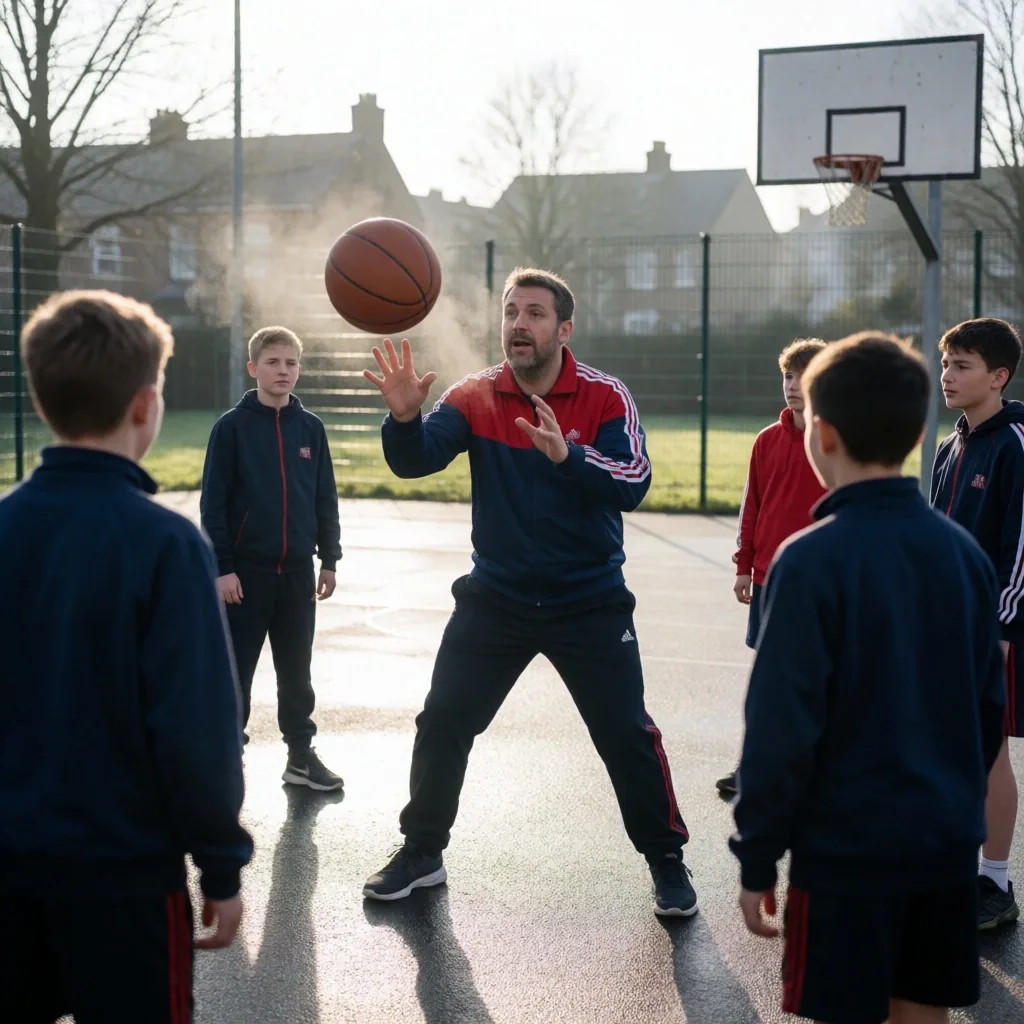
School and Youth Basketball Training
The development of young athletes is a cornerstone of the British grassroots sports community. Training programs for school-aged children provide the physical skills required for basketball alongside lessons in teamwork, discipline, and perseverance. This page offers educational guidance and information regarding youth training initiatives available across the UK, covering methods used in school basketball training and the pathways young people can follow to progress within their local regions.
Foundations of the Game
Physical education programs in British schools are often the first point of entry for young basketball players. These programs focus on building basic skills such as dribbling, shooting, and defensive positioning. We explore the common curriculum used in schools and how teachers adapt these drills for different age groups and ability levels.
School basketball training in the UK typically begins in Year 7, though many primary schools now introduce simplified ball-handling games in earlier years. The emphasis at Key Stage 3 is on fundamentals: stationary dribbling, chest passes, lay-up footwork, and man-to-man defensive stance. Coaches adapt these drills by adjusting court space, equipment size, and repetition counts to suit mixed-ability classes in a standard sports hall.
The goal of school-based training is to foster a love for the game while ensuring every student has the opportunity to participate and improve, regardless of prior experience or natural aptitude.
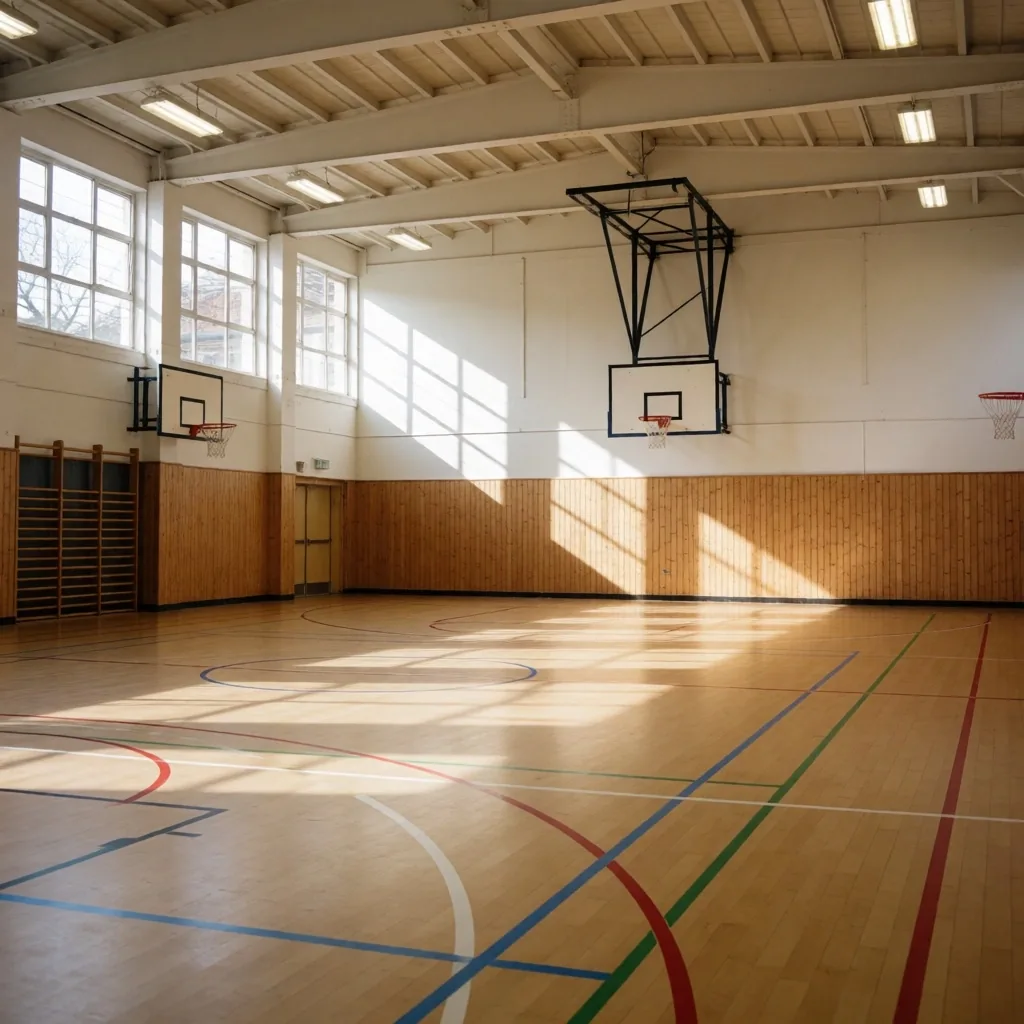
Typical setting — British school sports hall, term-time training
Local Grassroots Basketball for Youth
Beyond the school gates, local clubs play a vital role in youth development by offering more specialized training sessions. These clubs often provide a higher intensity of coaching and the chance to compete in regional youth leagues.
Community clubs typically train one or two evenings per week in leased sports halls or outdoor courts, with weekend fixtures against neighbouring towns. Sessions focus on position-specific work, set plays, and conditioned scrimmages that replicate match pressure. For parents considering a grassroots program, it is worth checking the club's safeguarding policy, the qualification level of lead coaches, and whether the session structure accounts for varying physical maturity within age-group bands.
Safety first. Look for clubs with published safeguarding policies and DBS-checked coaching staff.
Inclusivity matters. Good programs welcome all skill levels and adapt drills rather than turning beginners away.
Positive reinforcement. Coaches should reward effort and decision-making, not just outcomes.
Youth Basketball News
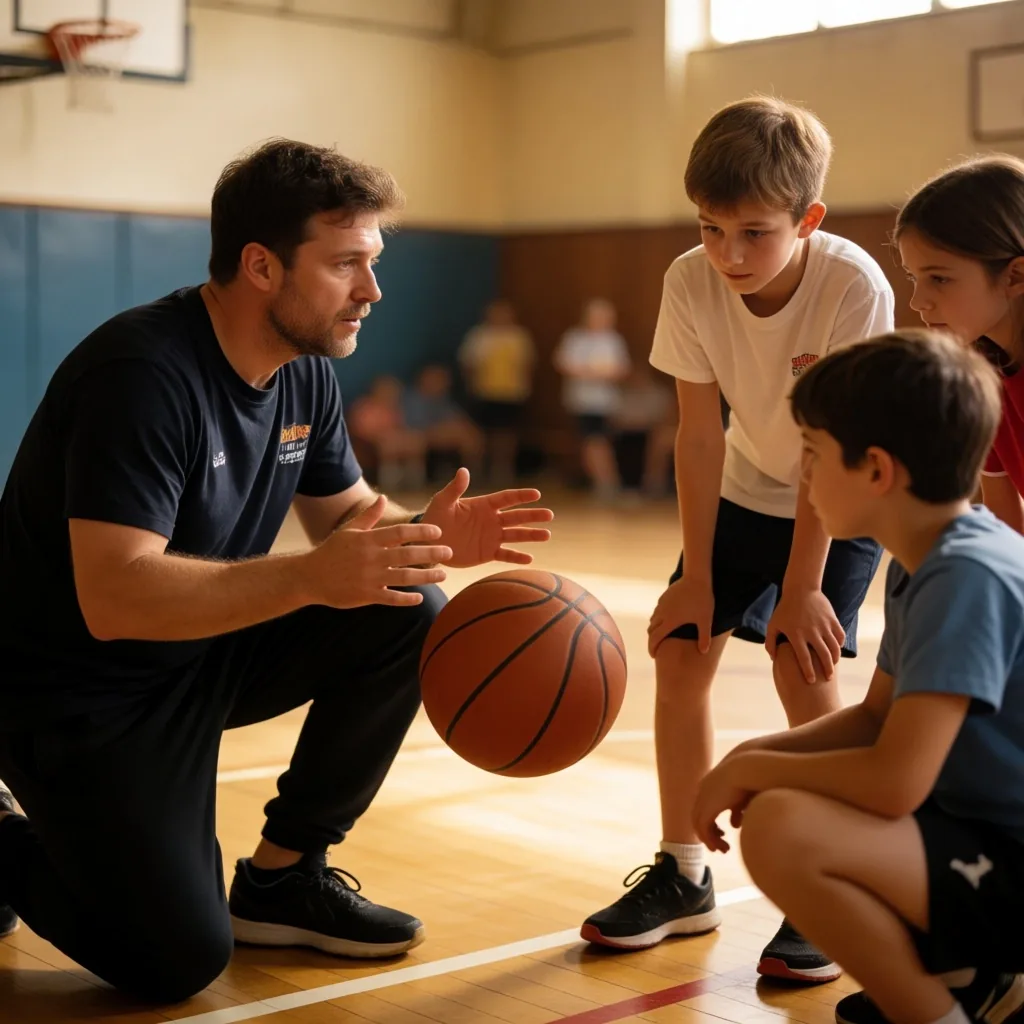
The landscape of youth basketball is constantly changing, with new training techniques and development philosophies emerging across British regional basketball circles. We report on these trends, such as the increased focus on small-sided games — typically 3v3 half-court formats — to maximize player engagement, touches, and decision-making per session.
Small-sided formats reduce standing-around time and force every participant into active involvement, which matters greatly in short term-time sessions where court minutes are limited.
Staying informed about youth basketball news allows coaches and parents to stay at the forefront of athletic development. Recent shifts include constraints-led coaching — where drills manipulate court space, defender numbers, and scoring rules rather than scripting fixed patterns — and a growing emphasis on multi-sport backgrounds during pre-adolescent years.
Our coverage ensures that the community is aware of the best practices currently being implemented across the country, from county-level talent pathways to volunteer-led after-school sessions.
We also track changes in how regional associations structure their youth fixtures, including the shift toward central venue leagues — where multiple teams gather at one site for back-to-back games on a single morning — and the growing use of digital fixture management tools by community volunteers.
These logistical shifts shape the weekly rhythm of amateur basketball in the UK and influence how often young players actually compete.
Community sports fixtures coverage · updated termly
View community fixturesCoaching Philosophies for Young Athletes
The role of a coach in youth sports extends far beyond teaching tactical plays. A good youth coach acts as a mentor and a role model, guiding young athletes through the challenges of competition and helping them navigate setbacks, selection disappointments, and the pressure of school-level fixtures.
Development Over Results
Coaches who prioritise player development over winning at all costs tend to produce athletes with longer playing careers. This philosophy means giving bench players meaningful minutes, rotating positions so children learn multiple roles, and treating losses as teaching opportunities rather than failures.
Risk-Taking Culture
Creating a supportive environment where young players feel confident to take risks and learn from their mistakes is essential. A defender who tries a steal and misses should hear encouragement, not criticism — fear of error stifles the creativity that grassroots basketball needs.
Mentorship Role
Youth coaches often become trusted adults outside the family structure. Building rapport means listening to players, understanding school pressures, and recognising when a child is carrying stress that has nothing to do with basketball.
Age-Appropriate Demands
Under-12s benefit from playful, game-based sessions with minimal standing in lines. Under-16s can handle structured tactical work but still need autonomy in decision-making. Matching expectations to cognitive and physical maturity keeps players engaged.
Pathways to Regional Representation
For many young players, the goal is to represent their town or region in larger competitions. The pathways to this level of play involve consistent training, participation in scouting events organized by regional associations, and selection through county trials.
In the UK, the typical route begins at a community club, progresses to a county or area squad, and from there into regional representation at inter-county tournaments. Regional associations — linked to Basketball England's network — hold open trials each season, and coaches may also nominate players directly through scouting forms submitted after league fixtures. Selection criteria typically assess technical skill, physical athleticism, tactical understanding, and coachability rather than raw scoring statistics alone.
Providing this information helps young athletes and their families understand the steps required to advance their amateur sporting careers — and the commitment in time, travel, and term-time balancing that comes with it.
Typical Progression Route
-
01
Community Club
Weekly training and local league fixtures, ages 8–14
-
02
County Trials
Open nominations or coach referral, held each autumn term
-
03
Regional Squad
Inter-county tournaments and regional development camps
-
04
National Talent Pathway
Scouting into national age-group programmes
Health and Fitness for School-Aged Players
Training for basketball involves a significant amount of physical exertion, making health and fitness a key consideration for youth programs. We provide information on appropriate warm-up routines, injury prevention, and the importance of rest for growing athletes.
Warm-Up Routines
A proper warm-up for children takes 10–15 minutes and moves from general mobility — jogging and dynamic stretching — to basketball-specific movements like defensive slides and progressive lay-up lines. Static stretching belongs after the session, not before.
Injury Prevention
Ankle sprains and finger jams are the most common youth basketball injuries. Well-fitting court shoes with ankle support, clean courts free of dust, and teaching correct landing technique from jumps all reduce risk during term-time fixtures.
Rest and Recovery
Growing bodies need more sleep than adults — 9 to 11 hours for children aged 8–13. Coaches should schedule rest days between high-intensity sessions and watch for signs of overtraining, including persistent fatigue and declining motivation.
Hydration
Children are more susceptible to dehydration than adults because they sweat less efficiently. Water breaks every 15–20 minutes during training, and avoiding sugary sports drinks for standard sessions, keeps young players safe.
The Importance of Academic Balance
While training is important, maintaining a balance between sports and academics is crucial for school-aged athletes. We discuss strategies for time management and the role of schools in supporting student-athletes who juggle homework, exams, and evening training sessions during term time.
Practical strategies include using a shared family calendar that blocks out training nights, building a 30-minute homework window before each session, and communicating proactively with form tutors when fixture schedules clash with coursework deadlines. Schools that take student-athletes seriously often provide study support on match days or flexible submission arrangements during regional tournament weekends.
Emphasizing the value of education alongside athletic pursuits helps develop well-rounded individuals who are successful both on and off the court. This balanced approach is a hallmark of the most respected youth programs in the UK, and a primary reason why local sports history in Britain is rich with stories of players who maintained their academic paths while representing their communities.
Time management. Block training nights in a shared calendar alongside homework windows.
School support. Form tutors can arrange flexible deadlines during tournament weekends.
Study first. Homework before training builds discipline and reduces late-night cramming.
Inclusive Training for All Abilities
Grassroots sports should be accessible to everyone, regardless of their starting skill level or physical ability. We highlight programs that focus on inclusive training, ensuring that all children have the chance to experience the benefits of basketball.
This commitment to inclusivity is essential for building a diverse and vibrant sporting community. We provide information on how training can be adapted to meet the needs of every young person who wants to play — from adjusting hoop heights and ball sizes for younger children, to running parallel seated sessions for players with mobility needs.
Adaptive Equipment
Lowered hoops, lighter size-5 basketballs, and textured grip balls help younger children and players with limited hand strength develop technique without frustration.
Mixed-Ability Sessions
Grouping by developmental stage rather than strict age allows late developers to build confidence alongside peers of similar physical maturity.
Quiet Sessions
Low-sensory training windows — reduced whistles, smaller groups, dimmed lighting where possible — make basketball accessible to neurodivergent children who find mainstream sessions overwhelming.
Wheelchair Basketball
Several regional clubs run parallel wheelchair sessions, and some integrate standing and seated players in the same half-court games using adapted rules — a model growing across British regional basketball.
British Grassroots Sports Hub — covering amateur basketball UK-wide
Continue Reading
About the Hub
Editorial Contact
British Grassroots Sports Hub
24 High Street, Birmingham B4 7SL
United Kingdom
+44 121 496 0842
[email protected]
Mon–Fri · 09:00–17:30